
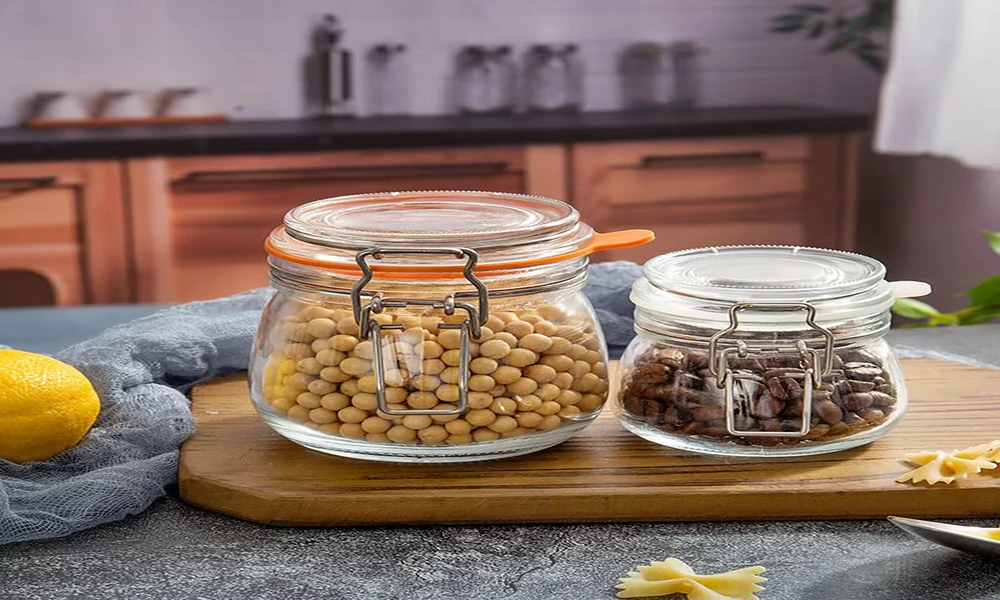
The instinct when buying storage containers is to prioritise size over seal quality, yet the seal is usually what determines whether the contents stay fresh at all. A standard snap-on lid loosens with repeated use and rarely forms a genuinely airtight barrier, while a jar with metal lock uses a hinged clamp and rubber gasket to press the lid down evenly, creating a seal that holds up to years of daily opening and closing without degrading the way a plain plastic clip does.
How a Metal Lock Mechanism Works
The clamp arm pivots on a metal hinge riveted to the jar’s rim, pressing a lid fitted with a rubber or silicone gasket down against the opening when closed. Because the arm applies consistent pressure across the entire circumference rather than relying on a friction fit, the seal remains reliable long after a standard snap-lid container has started to gape at the edges from repeated flexing. The mechanism also gives an audible click when fully engaged, a small detail that removes any guesswork about whether the jar is properly sealed.
Why an Airtight Seal Matters for Dry Goods
Flour, rice, pasta and other dry staples absorb ambient moisture whenever the seal is imperfect, which shortens shelf life and eventually leads to clumping or spoilage. An airtight seal also keeps out pantry pests such as weevils and moths, which can enter through gaps most people would never notice, and once established are far harder to eliminate than to prevent in the first place.
Materials Used in Metal Lock Jars
The jar body is typically food-grade glass or clear polycarbonate, both of which resist staining and odour absorption better than coloured or opaque plastics. Glass adds weight and fragility but shows contents clearly and tolerates a wider range of cleaning methods, while polycarbonate suits households wanting a lighter, shatter-resistant option without sacrificing much visual clarity through the jar wall. The metal clamp itself is usually stainless steel or a coated alloy, chosen to resist the corrosion that plain steel would suffer from repeated washing.
Sizing Options for Different Storage Needs
Smaller jars, typically under a litre, suit spices, coffee beans and other items used in small quantities where freshness matters more than bulk capacity. Larger sizes, often three litres or more, work well for flour, sugar and rice bought in bulk, reducing how often the pantry needs restocking while still keeping the contents properly sealed between uses. Mid-sized jars around one to two litres tend to be the most versatile choice for households that buy groceries weekly rather than in bulk.
Using These Jars Beyond the Kitchen Pantry
Outside the kitchen, sealed jars protect craft supplies, dried herbs, pet food and small hardware from humidity, particularly useful in Singapore’s climate where ambient moisture is a near-constant concern for anything stored in an ordinary cupboard. A clamp-lid storage container is equally at home organising a laundry room, garage workbench or home office supply drawer.
Caring for the Gasket and Hinge
The rubber gasket is the component most likely to wear out over time, and replacing it as soon as it stiffens or cracks preserves the seal far more cheaply than replacing the entire jar. The metal hinge benefits from an occasional wipe to remove food residue or dust, which otherwise builds up and can eventually stop the clamp from closing flush against the lid.
Cleaning Without Damaging the Seal
Hand washing with mild detergent is generally safer than a dishwasher for jars with a rubber gasket, since prolonged heat exposure accelerates gasket degradation over repeated cycles. Removing the gasket for a separate rinse when it comes loose, rather than scrubbing it in place, helps it keep its shape and continue sealing properly for longer.
Comparing Metal Lock Jars to Screw-Top Alternatives
Screw-top jars can achieve a similarly tight seal but require both hands and more time to open, which becomes a genuine inconvenience for items used several times a day. The single-handed clamp action of a metal lock jar suits frequent access far better, while still matching or exceeding the seal quality of a properly tightened screw lid. Screw threads can also strip or cross-thread over time, a failure mode the clamp hinge design largely avoids.
Signs It’s Time to Replace a Jar
A lid that no longer sits flush, a gasket that has visibly flattened or cracked, or a hinge that no longer clicks firmly into the closed position are all signs the seal can no longer be trusted. Continuing to use a jar past this point risks the exact moisture and pest problems the design was meant to prevent, so it is worth checking gaskets every few months rather than waiting for a visible failure.
Choosing the Right Jar for Your Home
Match jar size to how quickly contents get used, prioritise a replaceable gasket over a fixed seal that cannot be serviced, and choose glass or polycarbonate based on whether weight or impact resistance matters more in your kitchen. A well-chosen jar with metal lock will keep pantry staples fresher for longer while surviving years of daily use without the seal failing.