
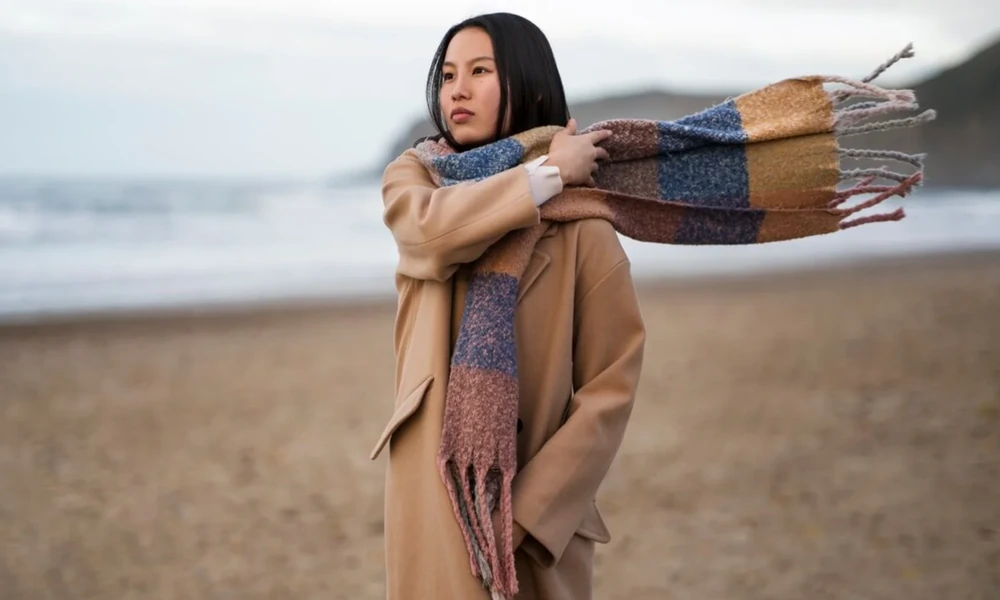
A familiar outfit can gain character through one small change. A scarf can introduce colour, texture, shape, or movement without replacing clothing. Its position can also alter the visual balance around the upper body. Folded neatly, it creates a sharper definition near the neckline. Draped loosely, it gives relaxed movement across simple layers. Those differences make one accessory useful across varied dressing needs.
Lightweight Fabrics Keep Styling Flexible
Thin materials allow easier folding around different necklines. A narrow wrap creates definition without adding visual weight. A loose drape works better with structured outer layers. Soft textures can also soften crisp shirts or fitted jackets. Since lightweight pieces occupy little space, several arrangements remain possible throughout one wardrobe.
- Narrow folds create cleaner neckline definition.
- Loose drapes add softer visual movement.
- Fine textures suit structured clothing well.
- Simple knots keep layered outfits balanced.
Can Placement Change Outfit Proportions?
Placement influences where attention settles across an outfit. A longer drop creates a stronger vertical direction. Short folds keep focus closer to the face. Shoulder draping can add width around narrow silhouettes. Meanwhile, an offset knot introduces an uneven detail without disrupting overall balance.
For scarf styling, position often matters more than complexity. A centered tie creates symmetry around the neckline. An angled arrangement brings a slightly relaxed character. Each choice changes the relationship between clothing, colour, and body shape.
Patterns Add Character Without New Clothing
Pattern selection can refresh familiar pieces without adding another garment. Small prints offer quiet detail across plain tops. Larger motifs create stronger focus near the face. Colorful designs can connect separate wardrobe shades through repeated tones. Therefore, pattern scale deserves attention alongside colour selection.
A restrained print suits clothing with strong details. Simpler garments provide room for expressive designs. Yet, patterned clothing needs more controlled accessories. This balance prevents competing elements from crowding the overall appearance.
What Does Draping Change Visually?
Draping technique gives the same piece another purpose. A compact loop keeps fabric close around the neck. A longer arrangement creates movement across the front. Shoulder placement shifts attention toward the upper frame. A simple knot provides definition without demanding complex preparation.
Fabric thickness also affects those choices. Fine material supports tighter folds and detailed knots. Heavier cloth needs broader arrangements for better balance. Because of that difference, texture becomes part of styling rather than decoration alone.
Colour Pairing Creates More Combinations
Colour coordination can extend the usefulness of one accessory. A repeated wardrobe shade creates a connected appearance. A contrasting tone can bring attention toward the face. Neutral clothing provides space for stronger colour accents. Soft shades work well when existing pieces already contain bold details.
- Echo an existing tone for visual connection.
- Choose contrast when plain clothing needs focus.
- Match muted shades with stronger garment colors.
- Keep nearby accessories quieter around bold patterns.
- Repeat subtle tones across separate outfit pieces.
Small Adjustments Keep Familiar Looks Fresh
Variety often comes from changing small styling details. A neck wrap can become a shoulder drape later. A narrow fold can replace jewellery around open necklines. An angled placement can alter the outfit’s center of attention. These changes require no additional clothing purchases.
One useful habit involves testing three arrangements beforehand. Comparing each version makes proportion differences easier to notice. The preferred option may involve the smallest adjustment. That observation helps build flexible dressing habits over time.
One Piece Can Change Proportion
A narrow fold can sharpen a structured jacket, while loose draping softens its appearance. That contrast shows how proportion influences styling more than quantity. Instead of adding another garment, changing placement can create a different visual direction. The smallest adjustment can therefore change how familiar clothing reads, especially around the neckline.
FAQs
Can one accessory suit different outfits?
Yes, changing folds, placement, and draping can create distinct appearances across different clothing combinations and occasions.
Does fabric thickness affect styling choices?
Yes, thinner materials support detailed folds, while heavier fabrics work better with broader and simpler arrangements.
Can patterned accessories work with patterned clothing?
Yes, careful control of colour and pattern scale can prevent competing details from overwhelming the overall appearance.
What makes an accessory versatile?
Flexible fabric, useful colors, manageable size, and multiple styling methods allow one piece to support varied outfit combinations.